

The Solar Terms
My 2024 art series explores natural wisdom and cultural heritage through the Chinese 24 Solar Terms 节气 (Jié Qì), which mark the changing seasons and reflect on the rhythms of life based on the Earth's position around the sun. The terms divide the 360 degree orbit into 24 equal parts, or 15 degrees each.
The names of each Solar Term refers to literal weather patterns and agricultural activities, but have evolved to have much deeper meaning and cultural significance.

01 | Start of Spring
Lì Chūn (立春), the first Solar Term, marks the first day of the Solar New Year— a few days before the Lunar New Year (its literal translation is "Start of Spring”). Occuring around Feb 3rd to the 4th, this period signifies when nature begins to awaken from its winter rest.
Symbolically, Lì Chūn is a time of renewal and hope. It represents a fresh start, inviting one to plant seeds not just in the ground, but in one’s life as well. Plum and peach blossoms are often associated with this period, as they are some of the first flowers to bloom in the transition from winter to spring.

02 | Rain Water
Yǔ Shuǐ (雨水), the second Solar Term, signals a time when winter’s chill begins to wane and the nourishing rains soak the earth. Occurring around Feb 18-20, this period signifies the earth's preparation for the rebirth of spring.
This period is not just about literal rain; it's a reminder of the importance of nurturing and preparation. A shift in perspective can turn rainy days from dreary to meaningful. As the rain revitalizes the soil, making it ready for sowing, it also invites us to prepare our minds and hearts for new growth and possibilities.

03 | Emergence of Life
Jīngzhé (惊蛰), the third Solar Term, marks the awakening of the earth as it stirs from its winter slumber. Occurring around March 5th to the 7th, this time heralds the subtle signs of spring's imminent arrival. 惊蛰 can be literally translated as “stirring from hibernation” and is traditionally known as “Awakening of Insects.”
I’ve interpreted it as “Emergence of Life.” This period is more than just about the stirring of dormant creatures; it symbolizes a period of awakening and renewal for us all. Like those emerging from hibernation, we have chance to lift out of the haze of slumber and embrace the new growth that Spring will soon bring.

04 | Spring Equinox
Chūnfēn (春分), the 4th Solar Term, marks the Spring Equinox. This time signals a moment of perfect balance, where day and night share equal lengths (its literal translation is 'spring division'). Occurring around March 20th to the 21st, this solar term typically coincides with the official first day of Spring.
Chūnfēn 春分 celebrates equilibrium and renewal. It reminds us that balance throughout the universe is essential and that growth often springs from harmony. May this time inspire us to embrace both light and shadow, and to find that balance in our own lives.

05 | Pure Brightness
Qīngmíng (清明), the 5th Solar Term, is a time for reverence and renewal. Translated as Pure Brightness, it occurs this year on April 4th, marking the time when the skies become especially bright after a season of rain. It is also celebrated in Chinese culture as Tomb-Sweeping Day, when families come together to honor their ancestors, tidying gravesites and commemorating the lives that have paved their paths. This act of cleansing to honor the past reflects Qīngmíng's deeper meaning of purification and renewal.
The period of Qīngmíng inspire us to clear our own spaces—both physical and emotional—to make room for new growth and possibilities. It's a reminder that, just as we care for the people and places that connect us to our past, we must also nurture the world inside and around us, welcoming the brightness that the future holds.

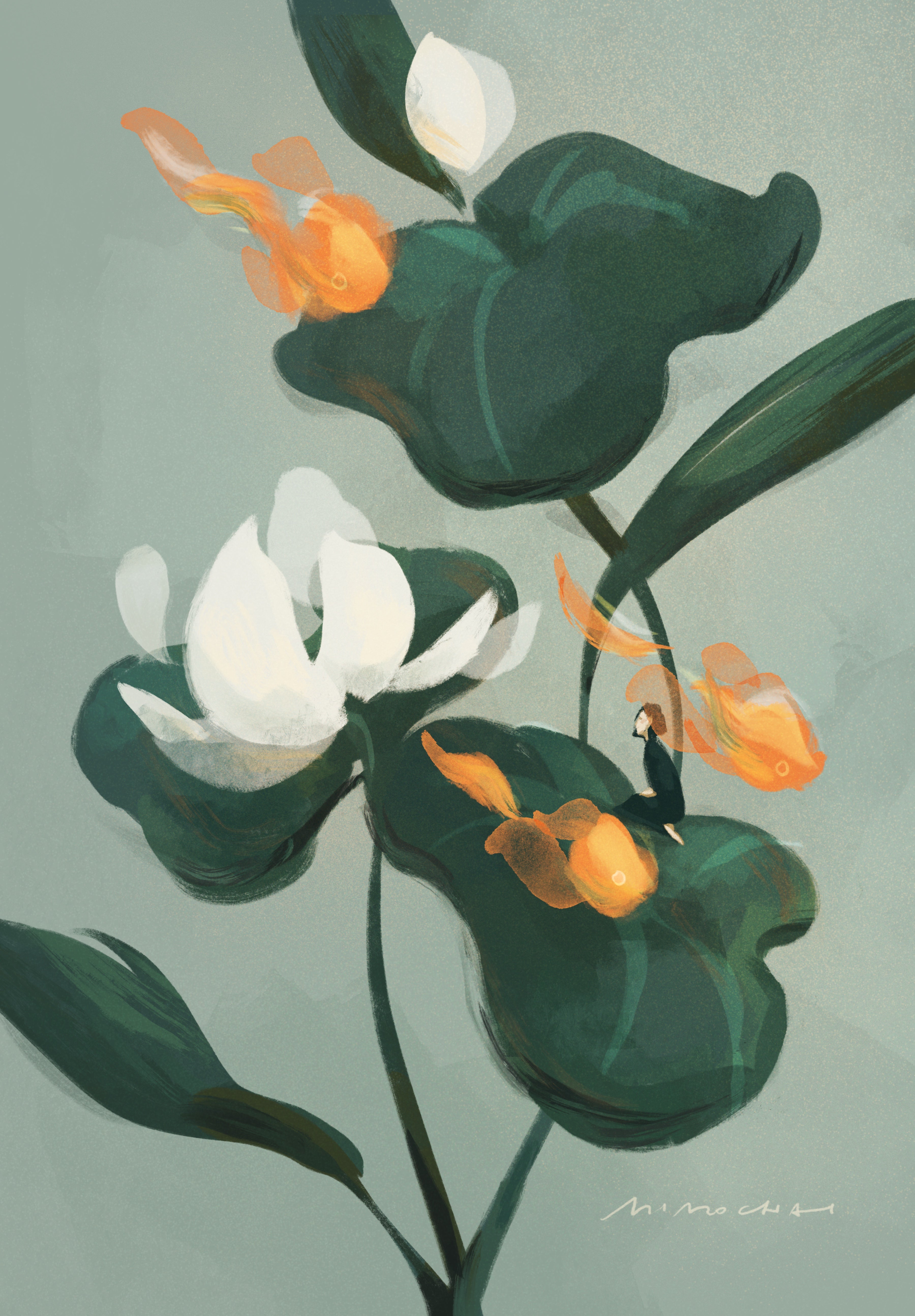
06 | Grain Rain
Gǔyǔ (谷雨), which translates to 'Grain Rain,' is the 6th solar term and arrives on April 20th. It is the last Solar Term of Spring and marks a pivotal moment in the cycle of seasons. Unlike the earlier 雨水 Rain Water Solar Term, Grain Rain specifically celebrates the vital showers that ensure the flourishing of crops.
This period of rain nourishes the growth we kindled in the early days of spring, signaling a period ripe with potential and the promise of abundance. It reminds us that the care of our seeds is a continuous act of giving over the course of time. Here, a heron symbolizes patience, determination, and intuitive wisdom. As the final chapter of spring before we enter the early days of Summer, Gǔyǔ invites us to observe the transition within nature and ourselves.
07 | Start of Summer
Lì Xià (立夏), the 7th Solar Term, marks the Start of Summer. Occuring around May 6th, this is the first of the summer set of Solar Terms, welcoming a wave of warm and bright energy. As nature transitions from the coolness of spring to the vibrancy of summer, this Solar Term draws our attention to the transition period between the Spring Equinox and Summer Solstice.
With Lì Xià, the days grow longer and the nights shorter, a reminder of summer’s playful and energetic spirit. It’s a wonderful time to be outdoors, soak in the sunlight, and remember our connection to nature.

08 | Grain Full
Xiǎo Mǎn (小满), the 8th Solar Term, marks the time when the grains are becoming full but are not yet fully ripe. Occurring around May 20th to 22nd, this period signifies the growth and development of crops as they start to reach their full potential. Although commonly translated as “Grain Full,” the term literally means “lesser or smaller full grain,” reflecting the just-before-perfectly-ripe phase.
This period is a reminder of the importance of continued patience and nurturing. Just as the grains are gradually filling, we too can allow ourselves the time to grow and develop, especially in the final stages. By tending to our inner and outer environments, we create the conditions necessary for our own ripening and fulfillment.

09 | Grain in Ear
Mángzhòng (芒种), the 9th Solar Term, marks the time when the crops from the prior period are finally ready for harvest. Occurring around June 5th to 7th, this period is also known as “Grain in Ear,” symbolizing the culmination of hard work and the gathering of abundance. 🌾
This is a time of both action and reflection. Just as the farmers are busy in the fields, preparing to reap what they have sown, we are invited to recognize the fruits of our own efforts. It’s a reminder that every season of growth leads to a harvest, whether it’s in our personal endeavors or in the natural world around us. Though it may not happen in the timeframe we wish or expect, it will eventually come. 🌱

10 | Summer Solstice
Xià Zhì (夏至), the 10th Solar Term, marks the longest day of the year, a time when the sun reaches its highest point in the sky. In ancient China, this day was associated with abundance, but also with the idea that after reaching a peak, all things begin to shift.
Xia Zhi invites us to to embrace the fullness ofthe season. How can you bring intention to thisperiod of warmth and light? Just as the land flourishes under the sun but slows as the heat deepens, we, too, can savor the richness of this moment—moving with joy, living with ease, and letting summer unfold at its own pace.

11 | Minor Heat
Xiǎoshǔ (小暑), the 11th Solar Term, means "small heat," referring to the gradual increase in temperature. While the real heat of summer is yet to come, the shift is noticeable. Traditionally, people began preparing for the hottest days ahead, finding ways to stay cool and protect themselves from exhaustion.
In life, Xiao Shu reminds us that intensity often builds slowly. It teaches us the importance of pacing ourselves—of knowing when to push forward and when to rest. By aligning with the season’s rhythm, we can move through challenges with greater ease.

12 | Major Heat
Dà Shǔ (大暑), the 12th Solar Term, marks the most intense period of summer heat. In the past, this was a time when the temperatures
demanded stillness—farmers rose early to work before retreating to shade, and daily life
slowed to match the rhythm of the season.
Dà Shǔ reminds us that even in intensity, there is something to savor. The world is brimming with warmth, fruit hanging heavy on the trees, cicadas singing into the golden afternoons. This is a season that asks us to move with the heat, not against it—to yield, to rest, to enjoy the fullness of summer while it lasts.

13 | Start of Autumn
Lìqiū (立秋), the 13th Solar Term, signals the beginning of autumn, though summer’s heat often lingers. In ancient times, this was a time of both harvest and early preparation—storing grains, gathering firewood, and anticipating the approaching change in seasons.
Li Qiu asks us: How can we welcome change with ease, rather than resistance? Transition is not always a single moment but a gradual unfolding. By softening into it, rather than fighting against it, we allow this season of transformation to carry us forward with grace.

14 | Limit of Heat
Chù Shǔ (处暑), the 14th Solar Term, marks the time when the summer heat begins to wane and the true shift into autumn begins. The days are still warm, but the nights grow cooler, and with them comes the quiet reminder that summer will not last forever.
Chù Shǔ reminds us reminds us that change often carries both gratitude and longing. How can you appreciate what is here while knowing it will soon pass? The last days of summer invite us to embrace their warmth—not in fear of losing it, but in celebration of having it at all.

15 | White Dew
Bái Lù (白露) the 15th Solar Term, shifts us into the cooler period of the year. Chilled nights leave silver droplets on grass and leaves, evaporating with the morning sun. This was seen as a sign that autumn was deepening, bringing crisp air and the slow turning of the seasons.
Bái Lù is a lesson in impermanence. The dew exists only briefly, delicate and fleeting, dissolving before we can fully grasp it. It asks us: What in our lives is just as temporary? What beauty do we overlook in its brief existence? This is a time to reflect, to gather our thoughts, and learn to embrace experiences without clinging onto them.

16 | Autumn Equinox
Qiūfēn (秋分) Autumn Equinox, the 16th Solar Term, is the point in our solar movement when day and night are perfectly balanced, echoing the harmony first seen in the Spring Equinox. As the sun reaches 180° along the ecliptic, it marks autumn’s midpoint, reminding us that transitions often hold both light and shadow.
In this season of life, we may feel a pull between uncertainty and celebration, tension and warmth. Qiūfēn reminds us that balance doesn’t mean everything is equal—it means holding space for opposites to coexist. As the nights grow longer, we can embrace the remnants of light, finding steadiness and perspective even in complexity.

17 | Cold Dew
Hán Lù (寒露), the 17th Solar Term, signals the time when air turns crisp, and heavy dewdrops linger longer. As autumn deepens, plants begin to wither, birds begin their migration, and the first hints of frost appear. The earth enters a period of retreat, conserving strength for the coming winter.
Hán Lù reminds us that letting go is not the same as losing. The birds that leave will return. The plants that wither will bloom again. This season teaches us the art of release—of knowing when to pull back, when to step away, when to trust that rest is not an ending but a necessary part of the cycle.

18 | Descent of Frost
Shuāngjiàng (霜降), the 18th Solar Term, occurs as the sun reaches 210° along the ecliptic. It marks the last solar term of autumn as early frost forms delicate boundary between the fading warmth of autumn and the approaching chill of winter.
Traditionally, Shuāngjiàng was seen as a time to prepare for the hardships of winter. Farmers finished harvesting their fields, and families began preserving food for the cold months ahead. This solar term reminds us of the importance of readiness and care, of tending to what sustains us—whether it’s storing provisions or nurturing relationships that keep us warm through life’s colder seasons. With careful preparation, a season of perceived hardship can be transformed into a season of welcomed rest, reflection, and recovery.

19 | Start of Winter
Lìdōng (立冬), the 19th Solar Term, signals the first chapter of the year’s final season. This Solar Term marks the time when the natural world begins to quietly retreats to conserve energy and people traditionally prepared their homes for the colder months ahead.
While in western traditions winter is often celebrated as beginning with the Winter Solstice, Lìdōng occurs in early November and teaches us to notice the subtle shifts that lead us into the season’s depths, giving us adequate time to gather what we need for rest and restoration.

20 | Minor Snow
Xiǎo Xuě (小雪), the 20th Solar Term, notes the first snow that begins to fall, light and delicate. It is only a glimpse of what’s to come, but still, it stirs something within us. Traditionally, this was when people prepared for deep winter— not just for survival, but for the warmth of gathering, the glow of lanterns, and the rest that this season offers.
Xiǎo Xuě reminds us that even in the cold, there is wonder. How might you find warmth in the season ahead? The hush of snowfall, the glow of home, the quiet excitement of knowing that winter brings not only hardship, but moments of beauty, connection, and renewal.

21 | Major Snow
Dà Xuě (大雪), the 21st Solar Term, calls for the landscape to be transformed, blanketed in snow. Temperatures drop, rivers begin to freeze, and the world moves deeper into winter’s embrace. In traditional China, this was a time of preservation—staying warm, conserving energy, and finding joy in stillness.
Dà Xuě teaches us that winter is not just a time of cold but of vast, quiet beauty found in restoration. It reminds us that dormancy is not emptiness—beneath the surface, life is resting, gathering strength for the spring to come

22 | Winter Solstice
Dōng Zhì (冬至), the 22nd Solar Term, marks the longest night of the year, a moment of deep stillness before the return of light. In traditional China, this period was celebrated with family gatherings, warm foods, and a recognition that darkness always gives way to brightness.
Dōng Zhì reminds us that even the darkest of nights, we can find reasons to celebrate. With a shift in perception, a time we dread is transformed into a time we hold dear.

23 | Minor Cold
Xiǎo Hán (小寒), the 23rd Solar Term, brings us into the Gregorian calendar new year. Thus while we sense that a new cycle has begun, at the same time we are still in the midst of the winter season. The air grows sharper, the frost more intense. Though the days are beginning to lengthen, the cold deepens, reminding us that winter’s grasp has not yet loosened.
Xiǎo Hán reminds us to be gentle with ourselves at the start of the new year. How can we ease into the new year with care? Just as the earth does not thaw all at once, we, too, can honor the season by moving gently, setting intentions without urgency, and allowing change to awaken naturally.

24 | Major Cold
Dà Hán (大寒), the 24th Solar Term, brings us to the depths of winter. During this period, the harshest cold arrives, still and unmoving. In ancient China, this was the final test of endurance before the return of Spring. The landscape, though frozen, held the promise of change just beneath its surface.
Dà Hán reminds us that even in the most challenging season, spring is already stirring. The hardest moments are often the ones just before renewal, and a natural part of the cycle. This period is a time to find strength in stillness, to trust that rest is never wasted, and to know that renewal is already on its way.
Expanding Perspectives
Working on this project was a way for me to develop new art while learning about my cultural heritage. And, of course, I love working with themes of nature and mindfulness. The Solar Terms offer a guide to noticing the subtle shifts in nature's seasons and how these transitions can serve as a mirror for our own lives.
Learning about the Solar Terms also helped me expand my own perspective. Coming from a Western mindset, it initially took effort for me to even conceptualize a time when people did not live their lives as being split up into set weeks and months, but instead based on shifting periods of movement around the sun.
I appreciate any chance to break out of a set viewpoint and learn a different way of seeing. It's a reminder that things we may take for granted—the Gregorian calendar, in this case—can be perceived in many different ways.

Shop the Collection
More Series

keep in touch
Our Monthly Studio Letter shares our new art, classes, and resources: